
Most financial advisors will give you a boring, generic formula when you ask how much money to spend on hobbies. They will tell you to take a tiny percentage of your income, put it in a bucket, and spend it blindly. That advice completely misses the point of why we collect in the first place.
Collecting isn’t just about moving numbers around a spreadsheet. For true collectors, a purchase shouldn’t just be measured by its financial return on investment. It should be measured by its Return on Joy. Whether you collect rare glassware, vintage toys, or fine art, the personal fulfillment, historical preservation, and thrill of the hunt are massive parts of the equation.
However, letting joy drive your purchasing decisions does not mean you should throw financial discipline out the window. If you operate on a limited budget, every single dollar matters. You can protect your wallet while building a collection you love by adopting a practical, researched approach to spending.
A Lesson from the Trenches: Recognizing a Soft Market
To understand how to budget properly, you have to look at what happens when a market changes. In my years of dealing with vintage glassware, I have experienced the highs and lows of shifting trends. A perfect example of this happened when I purchased a Norman Rockwell collector plate.
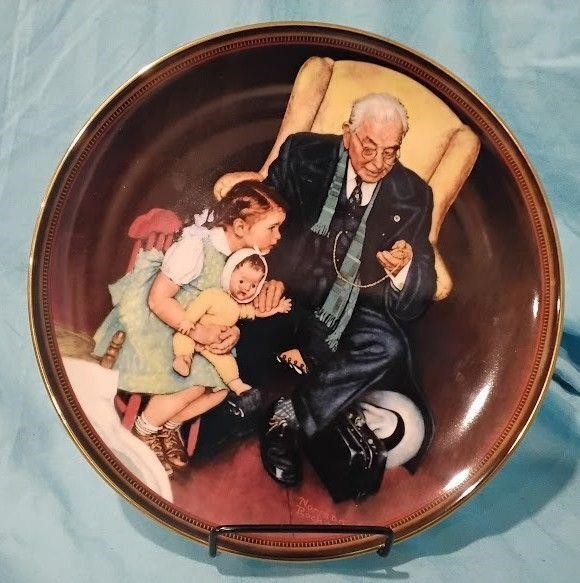
At the time, it felt like a solid addition. However, the market for those specific plates softened dramatically over time. The high demand faded, production numbers from decades prior saturated the market, and the resale value dropped.
When a market goes soft on an item you own, you face a choice. You can let a sunk cost paralyze you, or you can react like a realist. I chose to lower my sale price, accept the current market value, and move the inventory to keep my capital fluid. This experience completely shaped my philosophy on spending. It taught me that markets fluctuate, and you cannot let emotional attachments to what you wished an item was worth stop you from making smart financial moves today.
The Limited Budget Advantage
Operating with a strict, limited budget is not a disadvantage. In fact, it is the best financial protection a collector can have. When funds are limited, you are forced to be incredibly disciplined. You cannot afford to buy every shiny object that catches your eye.
A limited budget forces you to eliminate impulse buys and save your hard-earned capital for pieces that truly deserve a spot in your collection. It turns you from a casual spender into a deliberate, calculated curator. When you treat your collecting budget as a finite, precious resource, you naturally become highly selective about what you bring home.
The Golden Rule: Knowledge is Your Best Budget Tool
If you only have fifty or one hundred dollars to spend on collectibles this month, the most valuable asset you can deploy isn’t your cash. It is your time. The ultimate secret to protecting your budget is simple: do your homework and research an item thoroughly before you ever purchase it so you know its true, real-time value, especially when evaluating rare glassware and other vintage art glass collectibles where condition, provenance, and market demand can significantly impact value.
Before you hand over your money at an antique mall, flea market, or online auction, you need to investigate the item.

Steps to Research Before You Buy
- Check Recent Sold Prices: Do not look at what sellers are asking for an item. Look at what buyers have actually paid in the last thirty to ninety days on platforms like eBay. Asking prices are often based on wishful thinking; sold prices represent reality.
- Study Market Supply: Learn whether the item was mass-produced or truly rare. Mass-produced items from boom eras are highly susceptible to softening markets.
- Evaluate Condition Accurately: In collectibles, condition is everything. A minor chip in glassware or a slight tear in packaging can reduce the value by more than half. Know how to spot flaws before bargaining.
By doing your homework first, you transform your spending from a blind gamble into an educated choice. You will instantly recognize when an item is overpriced, and you will know exactly when you have stumbled upon a genuine bargain.
Balancing Joy and Reality
At the end of the day, how much you should spend depends entirely on the depth of your research and the limits of your available cash. Never spend money that should go toward your essential living expenses, and never buy a collectible assuming it will automatically appreciate in value.
Buy the pieces that bring you genuine satisfaction, but protect yourself by staying informed. When you pair an unyielding budget discipline with deep research, you will build a collection that brings a massive return on joy without ever breaking the bank.
Comments